Monogram X Monofont Caps X: A Strategic Tool for Distinctive Visual Identity
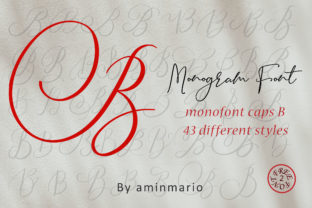
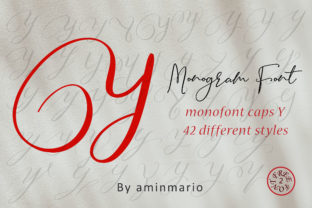
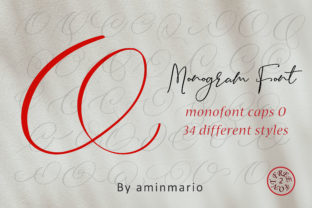
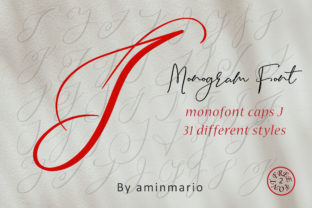
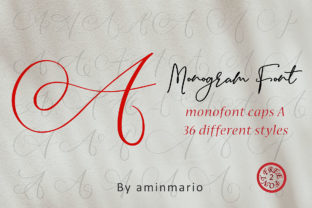
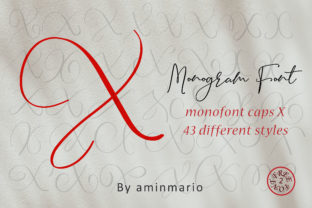
Monogram X Monofont Caps X is not a typeface for body text or paragraph composition. It is a focused, purpose-built resource: a natural handwriting interpretation of the capital letter X, rendered in 36 distinct stylistic variations — each crafted for monogram use only. This precision matters. When your goal is to express individuality, authority, or continuity through a single, resonant glyph — not to narrate, explain, or inform — Monogram X Monofont Caps X delivers intentional visual weight without linguistic distraction.
Why Monogram Use Demands Intentional Design — Not Default Fonts
Most designers reach first for standard sans-serifs or decorative display fonts when building monograms. That’s understandable — but often suboptimal. Generic fonts treat the X as part of an alphabet, not as a standalone emblem. Monogram X Monofont Caps X avoids that misalignment entirely. Each of its 36 versions emerges from natural hand-drawn motion: subtle pressure shifts, organic entry/exit strokes, and rhythm-driven line quality. The result? A monogram that feels human-authored, not algorithmically generated — critical when representing personal brands, studio identities, or signature product lines.
This distinction becomes strategic in contexts where perception drives outcome: a founder’s signature on a limited-edition print, a boutique’s embossed stationery, a podcast logo’s central glyph, or a maker’s engraved tool mark. In those moments, authenticity isn’t aesthetic preference — it’s credibility infrastructure.
Three Complementary Fonts — Designed to Work Together, Not Compete
The package includes more than the core monogram set. Two supporting typefaces — PLANETS SIGNATURE and WEST LONDON — extend usability while preserving conceptual cohesion.
- PLANETS SIGNATURE provides uppercase and lowercase characters with expressive, slightly irregular stroke modulation — ideal for short captions, labels, or signatures that need to echo the monogram’s handwritten ethos without mimicking it.
- WEST LONDON offers clean, confident letterforms with restrained contrast and open spacing — a grounded counterpoint for supporting text where legibility and neutrality matter most (e.g., website footers, business cards, or packaging copy).
Together, these three files form a small but coherent typographic system. You’re not choosing fonts at random; you’re assembling a hierarchy: one glyph for symbolic presence (X), one for expressive voice (PLANETS), and one for functional clarity (WEST LONDON). That’s how typography supports strategy — not decoration.
When Monogram X Monofont Caps X Adds Real Value
Use this resource deliberately — not decoratively. Consider these high-leverage applications:
- Founder Signatures on Deliverables: A consultant attaching a strategy deck, an educator distributing a course syllabus, or a designer sharing a brand guideline — all benefit from a consistent, hand-inflected X that signals authorship without crowding the message.
- Limited-Edition Branding: Small-batch products — ceramics, apparel, notebooks — gain perceived value when marked with a unique monogram variant. Rotating among the 36 styles across releases creates subtle narrative continuity (e.g., “Series I” uses Variant #7; “Series II” uses #22) without requiring new design work.
- Visual Anchors in Presentations: Rather than defaulting to bullet points or icons, use a selected X variant as a recurring visual anchor — beside section headers, key takeaways, or milestone markers. Its consistency builds subconscious recognition faster than changing icons ever could.
- Personalized Onboarding Assets: Freelancers and agencies can embed a chosen X variant into welcome kits, proposal covers, or client dashboards — reinforcing identity before the first meeting begins.
Risks of Using Monogram X Monofont Caps X Without Strategy
Having 36 options is an advantage — unless it becomes a decision trap. Random selection dilutes impact. If every email signature, social post, or invoice uses a different X variant, the effect isn’t eclectic — it’s inconsistent. That undermines trust, especially for professionals whose credibility rests on reliability.
Similarly, forcing Monogram X Monofont Caps X into contexts it wasn’t designed for weakens its strength. Don’t use it for headlines, navigation menus, or data tables. Its power lies in singularity — not versatility. Applying it where clarity or speed of reading matters most (e.g., legal disclaimers, pricing grids, instructions) introduces friction without justification.
And avoid pairing it with overly ornate or clashing fonts. Its handwritten character requires breathing room. Let PLANETS SIGNATURE or WEST LONDON carry supporting text — not a mismatched script or condensed sans-serif.
How to Choose — And Commit To — One (or Few) Variants
Start with alignment, not aesthetics. Ask:
- What feeling must this monogram convey? Authority? Approachability? Precision? Playfulness?
- In what contexts will it appear most frequently? Embossing? Digital thumbnails? Large-scale signage?
- Does it need to scale well at very small sizes (e.g., favicon, app icon)? Or does it live primarily at larger scales (e.g., wall art, book cover)?
Then test — not just visually, but functionally. Render your top 2–3 candidates at actual usage sizes. Print them. View them on mobile. Place them beside real supporting text (using PLANETS or WEST LONDON). Observe where legibility holds, where weight feels balanced, and where personality reads clearly — not just “interesting.”
Once selected, document your choice. Note the variant number, its intended use cases, and minimum size thresholds. Share that documentation with collaborators or contractors. Consistency compounds over time — but only if it’s codified, not assumed.
Long-Term Positioning: Beyond the Glyph
Monogram X Monofont Caps X gains increasing strategic value the longer it’s used with discipline. A consistently applied monogram becomes a silent identifier — like a musical motif or a recurring color in a film. Over months and years, audiences begin recognizing it before reading adjacent text. That’s cognitive efficiency working in your favor.
It also creates flexibility for future expansion. Because the monogram stands alone, you can introduce new applications — a podcast intro animation, a custom emoji for Slack, a watermark on video content — without redesigning core assets. The X remains stable; only its context evolves.
That stability supports long-term brand equity. Unlike trend-driven visuals that date quickly, hand-informed forms age gracefully — especially when paired with timeless supporting typefaces like WEST LONDON. What feels distinctive today remains legible and resonant five years from now, because it was built on craft, not novelty.
Practical Integration Checklist
- ✅ Audit current touchpoints: Where does your name or initial appear without full-word branding? Prioritize those.
- ✅ Select no more than two variants — one primary, one secondary (e.g., for dark/light backgrounds).
- ✅ Pair primary variant with PLANETS SIGNATURE for short, expressive labels; use WEST LONDON for all functional text.
- ✅ Embed font files properly in digital assets — ensure licensing permits web, desktop, and print use.
- ✅ Document usage rules (size minimums, spacing, background contrast) and share with anyone who produces branded material.
Monogram X Monofont Caps X is not about adding flair. It’s about reducing noise. It’s about replacing generic repetition with considered presence. Used with clarity of purpose — and paired intentionally with PLANETS SIGNATURE and WEST LONDON — it becomes a quiet lever for distinction, recognition, and coherence. Not every project needs it. But when yours does, deploying it thoughtfully changes how people perceive, remember, and return.