Monalisa: A Handwritten Font with Bold Character—What It Offers and When It Fits
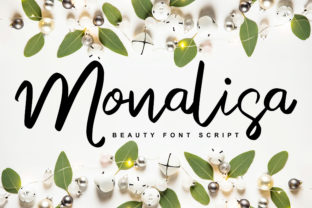
Monalisa stands apart in the landscape of handwritten typefaces—not by mimicking casual script, but by merging organic flow with deliberate weight and presence. It’s not a delicate cursive meant for wedding invitations alone, nor is it a rigid calligraphic revival. Instead, Monalisa balances spontaneity and structure: letters connect naturally, yet each stroke carries visual confidence. That bold twist—subtle but unmistakable—gives it grounding without sacrificing warmth.
What Makes Monalisa Distinctive
At first glance, Monalisa feels familiar: its rhythm echoes natural handwriting, with slight variations in letter height, gentle slant, and fluid joins. But look closer. The downstrokes are consistently thicker—sometimes dramatically so—while upstrokes remain fine and airy. This contrast creates texture and readability at larger sizes, where many handwritten fonts blur or lose definition. Unlike purely decorative scripts, Monalisa includes full Latin character sets, standard punctuation, and thoughtful OpenType features like contextual alternates and ligatures, supporting real-world typographic needs.
Its design avoids over-stylization. There are no exaggerated flourishes, no forced irregularities meant to simulate “imperfection.” Instead, Monalisa’s uniqueness lies in restraint: confident strokes, intentional spacing, and a sense of hand-drawn intentionality that reads as both personal and professional.
How Monalisa Compares With Other Handwritten Styles
Handwritten fonts fall broadly into three practical categories: casual scripts, formal calligraphic fonts, and expressive brush or marker styles. Monalisa sits between the first two—closer to casual scripts in rhythm and accessibility, but borrowing structural clarity from formal calligraphy.
Casual scripts—like those often found in free font libraries—tend to prioritize speed and informality. They’re great for social media graphics or playful packaging, but often lack consistency across weights, language support, or kerning pairs. Monalisa offers more typographic control: tighter spacing, balanced letterfit, and better performance in body text applications such as short editorial blocks or product descriptions.
Formal calligraphic fonts, by contrast, emphasize historical fidelity—precise angle, strict baseline discipline, and often limited character sets. They excel in certificates or luxury branding but can feel distant or overly ceremonial in everyday contexts. Monalisa bridges that gap: it retains expressive gesture while remaining adaptable to modern UI elements, email headers, or responsive web layouts.
Brush and marker fonts introduce high-contrast texture and energy, but their irregularity often limits legibility below 24pt—and they rarely scale well across devices. Monalisa’s bold twist delivers impact without sacrificing clarity at smaller sizes, making it more versatile for mixed-format projects.
Strengths and Realistic Tradeoffs
Monalisa shines where personality and presence matter without compromising function. Its strengths include:
- Readability at scale: Works effectively from 18pt headlines down to 14pt subheads—uncommon for handwritten fonts.
- Visual hierarchy support: The built-in weight contrast helps distinguish headings from supporting text without needing additional font families.
- Consistent tone: Avoids the “overly cute” or “too serious” pitfalls—ideal for brands aiming for approachable authority.
- Production-ready features: Includes standard ligatures, discretionary ligatures, and localized forms for Western European languages.
Yet Monalisa isn’t universally suited. Its boldness means it doesn’t recede gracefully in dense paragraphs—so it’s not ideal for long-form body copy. It also lacks true italic variants or multiple weights (light, medium, bold), limiting typographic layering options in complex layouts. If your project requires nuanced contrast—say, pairing a delicate caption font with a strong headline—Monalisa may need careful companion selection rather than standing alone.
Where Monalisa Fits Best—And Where It Doesn’t
Consider Monalisa when you need a human touch that still conveys competence. It works well for:
- Brand identities seeking warmth without informality—think wellness studios, boutique consulting firms, or artisan food labels.
- Digital interfaces where a single expressive font adds distinction to hero sections, testimonials, or CTA buttons—especially on sites using clean sans-serif body text.
- Print collateral like posters, postcards, or packaging where visual impact matters more than extended reading.
- Editorial use in magazines or newsletters for pull quotes, section dividers, or featured author names.
It’s less effective in scenarios requiring:
- Multi-weight typography systems—for example, if you need light, regular, semibold, and black variants within one family.
- Extensive multilingual support beyond Western European languages—Monalisa doesn’t include Cyrillic, Greek, or extended diacritics common in academic or global publishing.
- Accessibility-first environments where high-contrast, highly legible sans-serifs remain the safer default for body text.
- Projects demanding strict typographic neutrality—like legal documentation or technical manuals—where personality should remain secondary to precision.
Practical Pairing and Implementation Notes
Monalisa benefits from thoughtful pairing. Because it carries visual weight, it pairs best with neutral, open sans-serifs—fonts with generous x-heights and relaxed proportions. Think fonts like Inter, Manrope, or Work Sans. These provide balance: Monalisa supplies voice; the sans-serif supplies clarity and structure.
Avoid pairing Monalisa with other handwritten or script fonts—even subtle ones—as the combined effect can feel cluttered or indecisive. Similarly, high-contrast serifs (like Playfair Display) may compete rather than complement, unless used with significant size or spacing separation.
In digital implementation, test Monalisa across devices. Its bold strokes render well on retina displays, but older Android browsers may show slight hinting inconsistencies at very small sizes. For web use, serve it via variable-friendly formats (WOFF2) and consider fallback stacks that preserve hierarchy—even if the fallback is a system font, the structural intent remains intact.
Making the Decision: Is Monalisa Right for Your Project?
The question isn’t whether Monalisa is “good”—it’s whether its particular blend of expressiveness and structure aligns with your goals. Ask yourself:
- What role does typography play in this project? If it’s primarily functional (e.g., internal dashboards), Monalisa may add unnecessary complexity. If it’s part of identity-building or emotional resonance, it’s worth evaluating closely.
- How much typographic variation do you need? If your design system relies on three distinct weights or extensive stylistic sets, Monalisa’s single-weight nature may require supplementation.
- Who is reading this—and under what conditions? Monalisa performs well for short attention spans and visual scanning. For sustained reading, especially in low-light or mobile contexts, lean on tested body fonts and reserve Monalisa for emphasis.
- Does it reflect how your audience perceives your brand? Test it alongside your existing voice: Does it feel like a natural extension—or does it introduce dissonance?
Monalisa won’t replace every script font in your library—but it fills a specific, valuable niche: the handwritten font that holds its ground without shouting. It’s for designers and communicators who want authenticity with intention, warmth with weight, and personality with purpose. When those qualities match your needs, Monalisa becomes more than a stylistic choice—it becomes a quiet but confident part of your message.