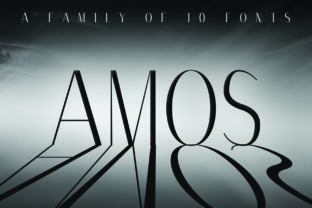
Amos: Light, Cool, Editorial Sans Serif
Amos is a sans serif font built for clarity and quiet confidence. It’s light—not thin to the point of fragility—but airy, open, and effortlessly legible. Its editorial twist comes from subtle structural choices: slightly flared terminals, balanced x-height, and generous letter spacing that invites reading rather than demanding attention. It doesn’t shout. It composes.
That restraint is precisely what makes Amos useful across real-world creative work. Whether you’re designing a newsletter for educators, branding a small-batch ceramics studio, or laying out a quarterly report for a nonprofit, Amos brings cohesion without cliché. It avoids the overused neutrality of many system fonts while staying grounded—never distractingly decorative, never coldly technical.
Where Amos Fits Naturally
Amos thrives where tone matters as much as information. Think of it as a visual collaborator: it supports voice instead of overriding it. A freelance writer launching a Substack? Amos gives body to long-form essays—its rhythm encourages sustained reading, and its light weight keeps the page feeling uncluttered. A boutique fitness studio updating their Instagram carousel? Pair Amos with clean photography and minimal color; its editorial lean adds sophistication without pretension.
It also bridges digital and print seamlessly. On screen, Amos renders crisply at small sizes—ideal for mobile-first blogs or SaaS dashboards needing clear interface labels. In print, it holds up beautifully in brochures or zines, especially when paired with thoughtful line spacing and modest margins. Unlike fonts designed solely for headlines or UI, Amos works across hierarchies: use it for body copy, pull quotes, captions, and even modest display settings (at 36–48px) without losing coherence.
Creative Applications That Go Beyond “Nice Typography”
Here’s where Amos becomes more than a type choice—it becomes a design decision with intention:
- Editorial identity systems: Publishers, literary magazines, and independent newsletters use Amos to signal thoughtful curation. Its consistency across headings, bylines, and body text builds trust—readers recognize the rhythm before they even process the words.
- Minimal brand expression: Small businesses—think local bookshops, sustainable apparel labels, or wellness coaches—find Amos ideal for logos and signage. It’s distinctive enough to stand alone but neutral enough to avoid locking them into a narrow aesthetic. Try setting a logo in all caps with tight tracking for impact, then switch to sentence case with generous leading for website body text.
- Educational materials: Teachers creating handouts, workshop decks, or student-facing PDFs benefit from Amos’s readability. Its open counters and even stroke contrast reduce eye fatigue during extended reading—especially important for neurodiverse learners or remote students on varied devices.
- Product packaging with personality: For physical goods, Amos adds quiet authority. Imagine it on a soy wax candle label: clean, modern, warm—not clinical. Use weight variation thoughtfully: regular for ingredient lists, medium for scent names, bold only for the brand name.
Practical Tips for Getting the Most From Amos
Like any strong tool, Amos rewards deliberate use—not just selection. Here’s how to keep your work clear, consistent, and audience-centered:
- Respect its lightness. Avoid pairing Amos with other ultra-thin or overly delicate fonts. Instead, ground it with a sturdy, low-contrast serif (like Literata or PT Serif) for contrast—or pair it with a single, well-chosen geometric sans (e.g., Inter or Manrope) if you prefer all-sans harmony. Never force it into heavy display roles unless you’re intentionally leaning into irony or contrast.
- Control spacing intentionally. Amos shines when line height is set between 1.5 and 1.7 for body text—and when paragraph spacing is generous (at least 1.8× line height). Tight lines or cramped margins mute its editorial calm.
- Use weight variation purposefully. Amos offers four weights: Thin, Regular, Medium, and Bold. Reserve Bold for true hierarchy—section headers or callouts—not every subhead. Let Regular carry most of the load; its balance is why people reach for Amos in the first place.
- Test across contexts. Preview Amos in the actual environments your audience will see it: on a mid-range Android phone, printed on uncoated paper, embedded in a Canva template, or rendered in a WordPress theme. Its light weight can fade on low-res screens if not paired with sufficient contrast or size.
Who Benefits Most—and How
Designers appreciate Amos for its reliability across formats and its ability to elevate simple layouts. But its real strength lies in accessibility for non-designers who need professional results without steep learning curves.
Bloggers and content creators use it to unify tone across posts, email footers, and social graphics—no need to juggle five different fonts to “feel cohesive.” Entrepreneurs building landing pages find it easy to implement via Google Fonts or variable font files, and its performance is lean (<100KB for the full family).
Educators repurpose Amos across slide decks, rubrics, and classroom posters—consistency reduces cognitive load for students. Freelancers pitch Amos as part of a streamlined brand package: one font, two weights, three clear applications (logo, web, print)—making proposals faster to build and easier for clients to approve.
And for hobbyists exploring typography for the first time? Amos is forgiving. It doesn’t punish minor alignment missteps or modest layout skills. It looks intentional, even when you’re still refining your eye.
A Final Thought: Type as Quiet Confidence
Amos doesn’t promise transformation. It offers something more sustainable: clarity, consistency, and room for your ideas to breathe. In a landscape crowded with flashy fonts and algorithm-driven trends, choosing Amos is a small act of intention—favoring readability over novelty, substance over spectacle.
That makes it especially valuable right now. Whether you’re drafting your first client proposal or redesigning a decade-old website, Amos supports the work—not the other way around. It won’t solve every design challenge, but it removes friction where it often hides: in the space between idea and execution, between message and reader, between effort and result.
Try it in your next project—not as decoration, but as infrastructure. Set a headline, write a paragraph, adjust the line height, step back. You’ll feel the difference: not loud, not flashy, but unmistakably present.