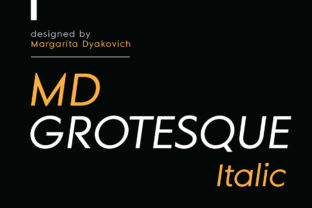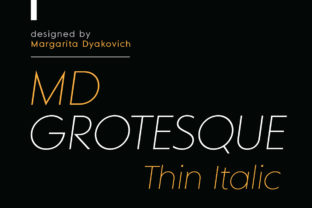
MD Grotesque Thin Italic
If you’ve landed on MD Grotesque Thin Italic, you’re likely drawn to its clean, whisper-thin strokes and confident slant — a font that feels both modern and quietly authoritative. It’s not flashy. It doesn’t shout. But when used well, it elevates minimalist branding, editorial layouts, and digital interfaces with quiet precision. That said, its elegance comes with nuance: this isn’t a “plug-and-play” typeface for every project. Misusing it — or misunderstanding what it’s designed to do — can backfire in subtle but meaningful ways.
What MD Grotesque Thin Italic actually is (and isn’t)
MD Grotesque Thin Italic is a meticulously crafted sans serif built for clarity at scale. Its thin weight and true italic construction (not just a slanted roman) give it rhythm and grace without sacrificing legibility. Unlike many ultra-light fonts that vanish on screens or blur in print, MD Grotesque Thin Italic maintains crisp contrast and open counters — key traits that support high readability, especially in longer text blocks or smaller sizes.
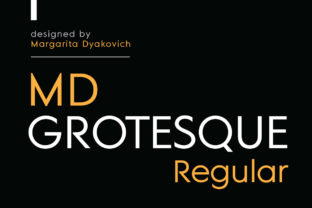
It’s not a display-only novelty. Nor is it a substitute for a full-featured type system. It’s one voice in a family — best paired with its matching roman, medium, or bold weights. Using it alone, without typographic companions, often leaves layouts feeling unbalanced or under-supported.
Common missteps — and how they quietly erode impact
Mistake #1: Assuming thin = universally legible
Thin fonts like MD Grotesque Thin Italic thrive in controlled environments — think high-resolution screens, generous line spacing, ample letter-spacing, and strong background contrast. But drop it into a mobile email with default rendering, low-DPI screens, or light gray text on white? Legibility collapses. Readers don’t notice the font — they notice the effort it takes to read.
Mistake #2: Using it as a “standalone brand font” without hierarchy
We’ve seen small businesses adopt MD Grotesque Thin Italic for logos, headlines, *and* body copy — all in the same weight. The result? A flat, monotonous visual rhythm. Without bolder weights to establish structure or a complementary serif/sans for contrast, communication loses emphasis and flow. Your message doesn’t get louder — it gets quieter.
Mistake #3: Overlooking licensing and technical fit
This font isn’t available on Google Fonts or Adobe Fonts by default. It’s typically distributed through independent foundries or direct licensing. Downloading unofficial versions risks missing critical OpenType features (like proper kerning pairs, stylistic alternates, or localized glyphs), or worse — violating usage terms. That can affect everything from PDF export fidelity to web performance and legal compliance.
Practical checks before you commit
Before adding MD Grotesque Thin Italic to your toolkit, ask yourself these questions:
- Where will it appear? Test it in real contexts — not just mockups. Try it in your CMS editor, your email client preview, and on two different mobile devices. Does it render cleanly at 14px on iOS Safari? At 16px in a PDF report?
- Do you have the full family? If you only license the Thin Italic, you’ll struggle to create visual hierarchy. Check whether the vendor offers a complete set — roman, medium, bold, and matching italics — and whether variable font options are available (which offer smoother weight transitions and smaller file sizes).
- What’s your fallback strategy? On the web, always define a sensible font stack:
font-family: "MD Grotesque Thin Italic", -apple-system, BlinkMacSystemFont, "Segoe UI", sans-serif;. Never rely solely on the custom font. - Is your color contrast sufficient? WCAG recommends a contrast ratio of at least 4.5:1 for normal text. With such a light weight, even dark gray (#333) on white may fall short. Use a contrast checker — and test with real users if possible.
Better approaches — simple, effective, respectful of the font
Use it where subtlety serves purpose
Think captions beneath high-res photography, pull quotes in long-form articles, or refined navigation labels in SaaS dashboards. In these cases, MD Grotesque Thin Italic adds sophistication without competing for attention. Pair it with a slightly warmer, more grounded sans (like Inter or Manrope) for body text — letting the Thin Italic shine *selectively*, not exhaustively.
Adjust spacing intentionally
Don’t assume default tracking works. For headings, try letter-spacing: 0.03em; for smaller text, increase line-height to at least 1.6 and add 1–2px of letter-spacing to prevent visual crowding. These micro-adjustments preserve airiness while reinforcing clarity.
Respect its role in systems — not just style
If you're building a design system or brand guidelines, treat MD Grotesque Thin Italic as a *tone-setting element*, not a decorative flourish. Define exactly when and where it appears: “Used only for quote citations and secondary navigation items. Never for primary CTAs, form labels, or data tables.” Clear boundaries prevent misuse and reinforce consistency.
A final note on intentionality
Great typography isn’t about owning the trendiest font — it’s about choosing the right tool for the job and using it with care. MD Grotesque Thin Italic rewards thoughtful application. It won’t fix poor layout decisions or compensate for weak content. But in the hands of someone who tests, adjusts, and respects its constraints, it becomes a quiet force multiplier: sharpening tone, refining perception, and supporting comprehension without drawing attention to itself.
That’s the hallmark of good typography — and why this font, when chosen and used deliberately, earns its place in serious creative work.