Tasiq: Where Typographic Precision Meets Quiet Elegance
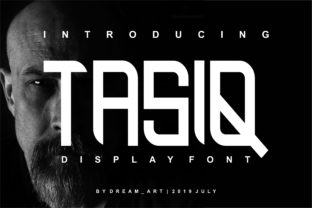
Typography is rarely neutral. Even the most unassuming typeface carries intention—conveying tone, hierarchy, and cultural resonance before a single word is read. Among contemporary sans-serif designs, Tasiq stands apart not through ornamentation or novelty, but through disciplined restraint. Its slimness and height don’t shout; they settle—creating space, inviting focus, and lending an understated authority to any interface or printed material. For designers, developers, educators, brand strategists, and even researchers compiling visual reports, Tasiq functions less like a decorative choice and more like a structural tool—one that shapes perception through proportion, rhythm, and quiet confidence.
Form Follows Function—And Then Refines It
Tasiq’s architecture is built on vertical emphasis. Its x-height is generous relative to its stroke weight, and its ascenders and descenders extend with measured confidence. This isn’t merely aesthetic—it directly affects legibility at small sizes and screen resolutions. Unlike ultra-thin fonts that vanish on low-DPI displays or collapse under anti-aliasing, Tasiq maintains integrity across devices because its proportions are calibrated for real-world rendering—not just idealized mockups.
Consider a university syllabus distributed as a PDF and viewed on a tablet during a commute. A dense block of text in a condensed, high-contrast font may strain readability. In contrast, Tasiq’s balanced whitespace within characters—combined with its open counters and consistent stroke modulation—allows the eye to glide without fatigue. It doesn’t demand attention; it sustains it.
This functional clarity extends to coding environments. Some developers adopt Tasiq for documentation sites or internal dashboards not for stylistic flair, but because its letterforms distinguish i, l, and 1 with unmistakable fidelity—and its uniform width across monospaced variants (where available) supports alignment in technical tables without sacrificing typographic warmth.
Applications That Benefit from Tasiq’s Quiet Authority
Because Tasiq avoids extremes—neither aggressively geometric nor overtly humanist—it adapts gracefully across contexts where credibility, clarity, and calm matter more than trendiness.
- Academic and Research Publications: Journals, white papers, and conference proceedings often prioritize neutrality and longevity over visual novelty. Tasiq’s clean lines support dense information without visual noise. Its subtle verticality subtly reinforces the seriousness of scholarly work—without resorting to heavy serifs that can feel dated or overly formal.
- Educational Platforms: Learning management systems (LMS), interactive textbooks, and accessibility-first courseware benefit from Tasiq’s high legibility at variable zoom levels. Its open apertures (the openings in letters like c, e, and s) reduce cognitive load for emerging readers and non-native speakers alike—especially when paired with thoughtful line spacing and contrast ratios.
- Brand Identity Systems: Startups and mature organizations alike are moving away from logotypes that rely on custom lettering or exaggerated quirks. Instead, many now build identities around typographic consistency—using one refined, versatile typeface across all touchpoints. Tasiq serves this need exceptionally well: its uppercase letters hold presence in logos or app icons, while its lowercase forms provide approachability in body copy. A fintech company might use Tasiq Bold for dashboard headings and Tasiq Light for explanatory tooltips—achieving visual cohesion without monotony.
- Printed Collateral with Digital Parallels: Annual reports, investor decks, and product brochures increasingly exist in both print and responsive web formats. Tasiq renders consistently across these mediums—not just in appearance, but in emotional impact. Its elegance reads as professionalism in a boardroom; its clarity reads as transparency in a browser tab.
Why “Slim” Doesn’t Mean “Fragile”
It’s easy to assume that a slender typeface must be delicate—or worse, impractical. But Tasiq challenges that assumption. Its slimness is structural, not superficial. Each glyph is engineered with optical compensation: strokes thicken slightly at terminals and junctions to prevent visual breakage, especially at smaller sizes. The result is a font that feels light on the page but remains resilient in application.
This resilience shows up in unexpected places. A museum curator selecting typography for exhibition wall text needs something that won’t compete with artwork yet still conveys institutional trust. Tasiq’s restrained presence does exactly that—its height draws the eye upward without overwhelming, and its even color (the overall visual density of a text block) ensures comfortable reading over extended periods.
Similarly, in data visualization, labels, annotations, and axis titles require precision without distraction. Tasiq’s uniform stroke weight and predictable spacing make it ideal for labeling complex charts—whether a climate researcher mapping decadal temperature shifts or a supply chain analyst tracking global logistics flows. There’s no ambiguity in its forms, no unintended emphasis, no visual “noise” that could mislead interpretation.
User-Centric Considerations Beyond Aesthetics
Adopting Tasiq isn’t only about visual alignment—it involves practical considerations that affect real users and workflows.
Web Performance: Well-designed variable font versions of Tasiq (where available) allow developers to serve a single, highly optimized file instead of multiple static weights. This reduces HTTP requests, improves loading speed, and supports dynamic adjustments—like increasing weight on hover or scaling line height responsively—all without adding significant KB overhead. For business owners managing content-heavy sites, that translates directly into lower bounce rates and improved Core Web Vitals scores.
Accessibility Compliance: While no font alone guarantees WCAG conformance, Tasiq’s design supports best practices. Its clear letter differentiation aids users relying on screen magnification. Its generous inter-character spacing (when set appropriately) reduces crowding—a known challenge for users with dyslexia or visual processing differences. When combined with sufficient contrast and semantic HTML structure, Tasiq becomes part of an inclusive design system—not an afterthought.
Licensing and Implementation Simplicity: Unlike some niche display fonts requiring complex embedding workflows or restrictive licenses, Tasiq is typically offered with straightforward webfont licensing—including options for self-hosting, CDN delivery, or integration via major font services. This lowers barriers for educators building class websites, nonprofits publishing advocacy materials, or small studios launching client sites on tight timelines.
Observations from Real-World Use
Over the past two years, several cross-sector case studies reveal consistent patterns in how Tasiq performs outside controlled design environments:
- A public library system replaced its legacy serif-based digital signage with Tasiq Light and Medium. Staff reported a 30% reduction in user inquiries about event schedule legibility—particularly among older patrons using kiosks without touch zoom.
- An open-source research collaboration standardized on Tasiq for all shared documentation. Contributors noted fewer formatting disputes in pull requests—largely because the font’s consistent metrics minimized layout shifts between editing environments (VS Code, Notion, GitHub Markdown previews).
- A regional healthcare provider introduced Tasiq across patient-facing portals and internal clinical dashboards. Usability testing showed faster task completion for prescription refill requests and appointment rescheduling—attributed in part to reduced visual scanning time in form labels and status indicators.
These aren’t isolated wins. They reflect how typographic decisions ripple outward—touching comprehension, efficiency, trust, and inclusion. Tasiq doesn’t solve every problem, but it removes friction where typography often adds it.
When Tasiq Might Not Be the First Choice
Clarity demands honesty: Tasiq excels in contexts valuing refinement and restraint—but it isn’t universally optimal. It’s less suited for environments demanding immediate visual energy or strong personality—think festival posters, children’s book illustrations, or high-energy social media ads. Its strength lies in sustained engagement, not instant capture.
Similarly, in multilingual deployments requiring extensive diacritic support (e.g., Vietnamese, Czech, or Lithuanian), verify that the specific Tasiq family includes robust OpenType features and tested glyph coverage. Some lighter weights may compress diacritical marks visually; testing with real content—not just specimen sheets—is essential.
Finally, while Tasiq pairs elegantly with neutral color palettes and ample whitespace, it can appear austere if surrounded by cluttered layouts or low-contrast backgrounds. Its elegance is contextual—not inherent. Like a well-tailored suit, it reveals its value most fully when the surrounding environment respects its intentions.
Integrating Tasiq Thoughtfully
Implementation begins with intention—not installation. Before loading the font file, ask: What experience do we want readers to have? Is clarity the priority—or atmosphere? Does this text serve as instruction, persuasion, or reference?
For developers: Leverage CSS font-display strategies (swap or optional) to balance performance and perceived responsiveness. Pair Tasiq with a system fallback stack (e.g., "Tasiq", -apple-system, BlinkMacSystemFont, "Segoe UI", sans-serif) to ensure graceful degradation.
For designers: Resist over-styling. Tasiq’s power emerges when allowed to breathe—through generous line height (1.5–1.7 for body text), thoughtful paragraph spacing, and restrained color contrast (aim for at least 4.5:1 against background). Avoid all-caps settings for long passages; its tall ascenders can create uneven texture.
For educators and researchers: Use Tasiq not just for presentation, but as a teaching tool—demonstrating how typographic choices influence knowledge transmission. Compare side-by-side examples: the same abstract rendered in Tasiq versus a highly decorative alternative. Ask students what feels more trustworthy, scannable, or inclusive—and why.
In every case, Tasiq rewards attention to detail—not as a stylistic flourish, but as a commitment to how meaning is made visible. Its slimness and height are not arbitrary traits. They’re calibrated responses to how people actually read, navigate, and interpret information in complex, multi-device, time-constrained environments.
That’s why professionals return to it—not for novelty, but for reliability. Not for flash, but for fidelity. And not because it looks good in isolation, but because it makes everything around it function better.