Lonely Lover: A Playful Font with Swirly Uppercase
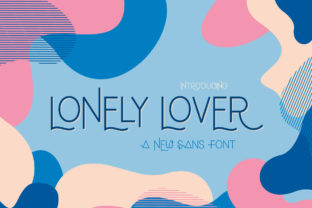
Lonely Lover isn’t just another font—it’s a visual conversation starter. Its uppercase letters curl and sway like handwritten notes passed between friends, full of personality and quiet confidence. Meanwhile, the lowercase sits cleanly in modern sans-serif territory: legible, uncluttered, and grounded. That contrast—whimsy above, clarity below—is where Lonely Lover finds its distinctive voice.
Why This Font Catches Attention (and Why It Should)
Most display fonts lean heavily into one mood: either bold and industrial, soft and dreamy, or minimalist and neutral. Lonely Lover straddles two worlds without feeling split. The swirly capitals invite pause; the crisp lowercase keeps reading moving. That duality makes it unusually versatile—not for every paragraph, but for moments where tone and texture matter as much as meaning.
For Designers & Brand Creators
You’re likely scanning for flexibility first: does it pair well? Does it scale? Can it hold up in motion graphics or print? Lonely Lover shines in short-form contexts—logos, social headers, book covers, or packaging accents—where character counts are low but emotional resonance is high. Try pairing its uppercase “L” or “O” with a clean, neutral sans like Inter or Manrope for body text. You’ll get contrast that feels intentional, not chaotic.
For Small Business Owners & Entrepreneurs
If you’re building a brand on your own—or with limited design help—you need tools that communicate warmth and distinction without demanding expert-level typography knowledge. Lonely Lover helps small studios, boutiques, and service-based businesses stand out in crowded feeds. A café owner might use it for their chalkboard-style Instagram story header (“Today’s Special”) while keeping menu details in a readable sans. No overhaul needed—just one thoughtful touch that signals care and individuality.
For Educators & Content Creators
When you’re designing slides, handouts, or digital course materials, readability is non-negotiable—but so is engagement. Students and learners respond to visual cues that suggest approachability and human connection. Lonely Lover works well for slide titles, section dividers, or quote callouts—places where you want emphasis *without* shouting. Just avoid using it for long paragraphs or small body text: its charm lives in brevity.
For Bloggers & Writers
Your voice is your strongest asset—and fonts can quietly reinforce it. If your writing leans poetic, reflective, or gently humorous, Lonely Lover’s playful yet poised rhythm mirrors that tone. Use it sparingly: a custom post title graphic, a signature line at the end of a newsletter, or the heading for a personal essay series. It won’t replace your main web font, but it can become a quiet signature—a detail readers begin to associate with your perspective.
For Hobbyists & DIY Makers
Whether you're printing greeting cards, laser-cutting wooden signs, or designing stickers for your Etsy shop, Lonely Lover adds handmade charm without requiring actual handwriting skills. Its uppercase swirls translate beautifully to cut files and vinyl decals. And because the lowercase remains clean and simple, you can mix both cases in one phrase—like “Made with love” where “Made” and “love” share the same font but different weights and moods.
What to Consider Before You Use It
Like any expressive typeface, Lonely Lover comes with practical trade-offs. Knowing what they are helps you decide if it fits *your* project—not just someone else’s idea of “cool.”
- Ease of use: It’s straightforward to install and apply in most design apps (Figma, Illustrator, Canva), but kerning may need manual tweaks in longer uppercase phrases—the swirls sometimes crowd each other at smaller sizes.
- Legibility: Works best at 24pt and up for display use. Avoid using all-uppercase blocks for anything longer than three words.
- Web performance: As a variable or multi-weight font family, file size matters. If you’re embedding it on a website, consider loading only the weights you actually need—and always provide a system-font fallback.
- Licensing: Check the license before using commercially—especially for logos, merchandise, or SaaS interfaces. Some versions allow unlimited use; others require extended licenses for certain applications.
- Creative fit over trendiness: It’s not a “viral” font—but it’s memorable in the right context. Ask yourself: does this support the feeling I want people to carry away? Not just “look nice,” but *feel* something specific?
Real Moments Where Lonely Lover Fits Naturally
• A wedding invitation suite where the couple’s names flow in swirling capitals, followed by crisp lowercase details about time and place.
• A mindfulness app’s onboarding screen: “Breathe in” in Lonely Lover uppercase, paired with gentle instruction text underneath.
• A ceramicist’s product label: the studio name in Lonely Lover, then material and care instructions in a functional sans-serif.
• A poetry chapbook cover—title centered, no imagery needed, just letterforms holding space like breath.
Does It Match Your Needs Right Now?
Ask yourself these questions—not as tests, but as quiet checkpoints:
- Is my project about making an impression in a few seconds? (Yes → Lonely Lover is worth exploring.)
- Do I need to convey warmth, intimacy, or quiet playfulness—not loud energy or corporate polish? (Yes → its balance of whimsy and clarity serves that well.)
- Am I comfortable adjusting spacing or choosing when *not* to use it? (Yes → you’ll get more from it than someone hoping for a “set-and-forget” solution.)
- Is legibility at small sizes or in long passages a top priority? (If yes → save it for headlines, titles, and accents instead.)
Lonely Lover doesn’t try to be everything. It’s not meant for data tables, legal disclaimers, or multilingual interfaces with complex scripts. But in the spaces where human voice meets visual form—where you want people to pause, smile, or feel seen—it offers something rare: intentionality wrapped in lightness.
Fonts don’t speak—but they echo. Lonely Lover echoes curiosity, tenderness, and the quiet joy of showing up as yourself.