Tantra Duo: A Modern Font Pair That Just Works
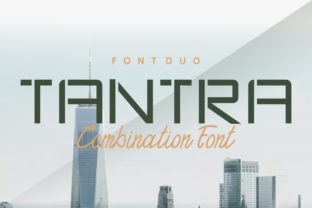
If you’ve ever spent twenty minutes scrolling through font libraries only to end up back at Helvetica—exhausted and uninspired—you’ll appreciate Tantra Duo. It’s not another “trendy” typeface chasing algorithmic virality. It’s two thoughtfully crafted fonts—Tantra (a clean, warm sans serif) and Tantra Script (a relaxed, rhythmic handwritten style)—designed to coexist, complement, and elevate each other without friction.
Tantra Duo feels modern because it avoids extremes. The sans isn’t sterile or overly geometric; its rounded terminals and subtle stroke modulation give it approachability. The script isn’t flashy or ornate—it’s confident but grounded, with natural entry/exit strokes and consistent x-height alignment that makes it legible even at smaller sizes. Together, they form a rare kind of harmony: one that supports hierarchy without shouting, adds personality without distracting, and scales gracefully from a tiny Instagram caption to a 48-inch trade show banner.
Where Tantra Duo Earns Its Keep
This isn’t a font pair for “just in case.” It earns its place where clarity and character matter equally. Think brand identity systems for wellness studios, indie book publishers, ceramic studios, or sustainable fashion labels—brands whose voice is calm, intentional, and quietly human. In editorial design, Tantra works beautifully as a headline + pull-quote combo: the sans sets context, the script adds emphasis with warmth. For packaging design, especially on matte paper or recycled kraft, the contrast between crisp sans and organic script reinforces authenticity—no stock imagery needed.
In web design, Tantra Duo performs well across devices. The sans renders cleanly at small sizes on mobile screens, while the script remains legible as a hero headline or CTA button label (when used at 24px or larger). On social media graphics, it cuts through visual noise—not by being loud, but by feeling *intentionally composed*. A food blogger using Tantra for recipe titles and ingredient callouts creates instant visual rhythm. A freelance illustrator promoting prints? Tantra Script in the logo, Tantra Sans in the shop description—cohesive, memorable, professional.
More Than Just Looks: What It Does for Your Work
Good typography doesn’t just look nice—it shapes how people read, remember, and respond. Tantra Duo supports readability by giving your eye clear entry points: the sans establishes structure; the script invites pause and focus. That dynamic builds natural visual hierarchy without relying on bolding, color shifts, or oversized type—reducing cognitive load.
For brand perception, consistency matters more than complexity. Using Tantra Duo across your website, business cards, email headers, and product tags creates quiet cohesion. Customers don’t need to notice the font—they just sense that everything “fits.” That subliminal alignment builds trust and reinforces professionalism, especially for small businesses without big design teams.
It also handles audience engagement with nuance. Unlike ultra-thin or tightly spaced display fonts, Tantra’s proportions breathe. Line spacing stays comfortable in body copy blocks. Letter spacing in all-caps headings remains open and readable—not cramped or aggressive. That attention to detail signals care, which readers (and buyers) register long before they consciously process it.
Testing It Right—No Guesswork Needed
Before committing, test Tantra Duo in your actual workflow—not just in a font previewer. Drop it into a real layout: a newsletter template, a product mockup, or a landing page wireframe. Ask yourself: does the script feel like an extension of the brand’s voice—or a decorative afterthought? Does the sans hold weight in paragraph text, or does it fade when set at 16px?
Check the included styles. Tantra Sans offers Regular, Medium, SemiBold, and Bold—enough for solid typographic contrast without needing italic variants for emphasis (though italics are available if needed). Tantra Script includes Standard and Alternate characters, letting you swap in looser or tighter versions of letters like ‘g’, ‘y’, or ‘s’ depending on spacing needs. That level of control matters when fine-tuning logo lockups or monogrammed packaging.
Readability testing matters most in real conditions. Try Tantra Script in a dark-on-light setting at 18px on a mobile screen. Then try it light-on-dark at 20px in a social post. If letterforms blur or merge, scale up slightly—or reserve it strictly for headlines and logos. Tantra Sans, meanwhile, holds up well in UI components, but avoid using its Light weight for interface labels—Medium or Regular will serve users better.
Licensing That Fits Real Projects
Tantra Duo is a commercial font, meaning it’s built for use beyond personal blogs or hobby projects. The license covers websites (with proper CSS @font-face implementation), digital ads, client work, print runs, and merchandise—no hidden caps on impressions or units. You don’t need separate licenses for desktop use vs. web use, and there’s no subscription fee. Once purchased, it’s yours to use across current and future projects, including those for clients.
That simplicity helps freelancers and small studios move fast. No negotiating usage tiers, no worrying about whether a Shopify store counts as “enterprise.” If you’re designing a brand kit for a local coffee roaster, building a Substack newsletter, or typesetting a poetry chapbook—Tantra Duo is covered. Just make sure you download the latest version directly from the foundry or authorized reseller to ensure full language support and OpenType features.
A Few Pairing Notes—Because One Font Is Rarely Enough
Tantra Duo is designed to be self-sufficient, but it also plays well with others. For longer-form editorial work, pair Tantra Sans with a neutral serif like IBM Plex Serif or PT Serif—the contrast grounds the layout without competing. Avoid overly decorative serifs or high-contrast scripts; Tantra Script already carries expressive weight, so supporting fonts should recede gracefully.
If you need a third voice—for data labels, captions, or footnotes—a simple mono-spaced sans like JetBrains Mono or Fira Code adds functional contrast without clashing. And yes, you *can* use Tantra Sans alone—but you’ll miss the quiet magic of the duo: the way the script softens the sans, and the sans gives the script purpose. That balance is why designers keep coming back to it, project after project.