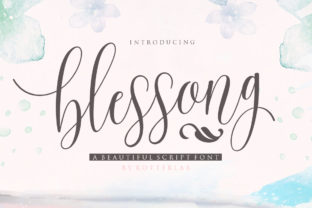
Blessong: A Stunning Handwritten Font
When your message needs warmth, authenticity, and visual impact—without sacrificing clarity or professionalism—Blessong stands apart. It’s not just another script font. Blessong is an incredibly stunning handwritten font with a lot of character: fluid yet controlled, expressive yet legible, organic yet intentional. Designed for real-world use—not just display—it bridges the gap between human touch and digital precision.
Why Character Matters in Communication
In a world saturated with sterile sans-serifs and overused templates, readers subconsciously respond to authenticity. Blessong’s subtle variations in stroke weight, natural entry/exit flourishes, and carefully tuned letter spacing mimic genuine handwriting—not robotic replication. That nuance builds trust. A small business owner crafting a welcome email in Blessong signals care. An educator designing a classroom poster communicates approachability. A freelance designer presenting a mood board conveys intentionality, not automation.
Where Blessong Delivers Real Creative Leverage
Blessong shines where personality must carry weight without compromising function. Consider these practical applications:
- Branding for service-based businesses: A yoga studio, boutique bakery, or independent therapist can use Blessong in logos, social bios, or packaging to reinforce values like calm, craft, or compassion—without appearing gimmicky or juvenile.
- Digital content with emotional resonance: Bloggers writing about personal growth, educators sharing reflection prompts, or newsletter creators highlighting key takeaways find that short headings or pull quotes set in Blessong slow the reader down—inviting deeper engagement.
- Printed materials that feel hand-crafted: Wedding invitations, limited-run zines, or artisan product labels gain tactile credibility when Blessong anchors key text. Its open counters and generous x-height ensure readability even at smaller sizes on physical stock.
It Saves Time—Without Sacrificing Distinction
Many designers spend hours layering textures, adjusting kerning manually, or sourcing custom lettering to achieve a “handmade” feel. Blessong eliminates that friction. Its built-in alternates (accessible via OpenType features) offer stylistic flexibility—swash capitals, contextual ligatures, and varied lowercase forms—so one font family adapts across uses. You don’t need to switch fonts to shift tone; you adjust features. That means faster iteration, consistent voice across platforms, and less decision fatigue when balancing aesthetics with deadlines.
Who Benefits Most—and Why
Blessong serves creators who value both efficiency and expressiveness—but it’s not universal. It works best when contrast and hierarchy are thoughtfully applied. For example:
- Freelancers and small studios appreciate how Blessong helps differentiate client work quickly—especially for lifestyle, wellness, education, or creative industries where brand warmth is non-negotiable.
- Educators and nonprofit communicators use it to soften formal messaging—think grant application headers, workshop handouts, or community newsletters—making institutional content feel more inclusive and grounded.
- Bloggers and content creators integrate it sparingly but strategically: as a signature font for article titles, section dividers, or featured quotes—adding rhythm without overwhelming body text set in a clean, readable serif or sans-serif.
It’s less ideal for dense UI interfaces, legal disclaimers, or data-heavy reports where neutrality and scanning speed take priority. Blessong invites attention; it shouldn’t compete with critical information.
Thoughtful Pairing Makes All the Difference
Blessong gains strength through contrast. Pair it with a structured, highly legible companion—like a warm neutral sans-serif (e.g., Poppins, Inter, or Lato) or a gentle serif (e.g., Merriweather or Cormorant Garamond). Use Blessong for headlines, callouts, or decorative elements; let the supporting font handle paragraphs, captions, and navigation. This hierarchy ensures clarity while letting Blessong’s character breathe.
Avoid pairing it with other high-contrast scripts or overly decorative fonts—they’ll clash tonally and dilute its impact. And while Blessong includes multilingual support for Western European languages, users working with extended Cyrillic, Arabic, or East Asian scripts should verify coverage before committing to large-scale projects.
Realistic Expectations—and When to Compare Options
No font solves design problems alone. Blessong elevates execution—but only if aligned with strategy. If your goal is minimalist sophistication, a refined serif may serve better. If you need maximum accessibility for long-form reading, Blessong belongs in accents, not body copy. Always test at actual size and context: how does it render on mobile? Does it hold up in low-resolution email clients? Does it load reliably in web projects?
For web use, consider variable font options or lightweight WOFF2 subsets to maintain performance. While Blessong isn’t inherently “lighter” than many premium scripts, thoughtful implementation keeps file size and loading time in check.
More Than Aesthetic—It’s Intention Made Visible
Using Blessong signals something quiet but meaningful: that you’ve considered how tone lives in typography. It reflects care—not just in appearance, but in how people experience your work. A handmade greeting card feels more personal. A presentation slide with a Blessong title lands with quiet confidence. A landing page headline sets a welcoming, human-centered tone before the first sentence is read.
That resonance doesn’t come from novelty alone. It comes from Blessong’s balance—of control and spontaneity, elegance and ease, distinction and restraint. It’s why illustrators embed it into hand-drawn assets, why marketers choose it for seasonal campaigns, and why educators return to it year after year for student-facing materials.
Ultimately, Blessong helps turn any design idea into a piece of art—not by masking effort, but by honoring the human gesture behind every choice. It reminds us that clarity and charm aren’t opposites. They’re collaborators. And when used with purpose—not just decoration—it becomes a quiet amplifier for voice, values, and vision.