Kinantey: A Refined Monoline Signature Font for Purposeful Design
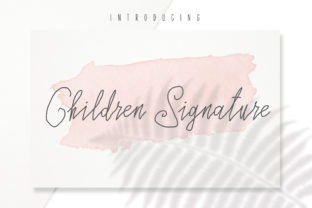
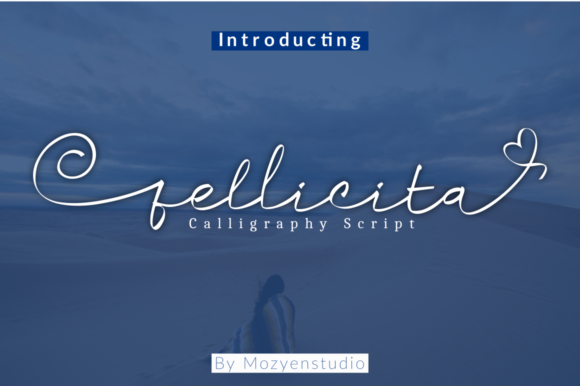
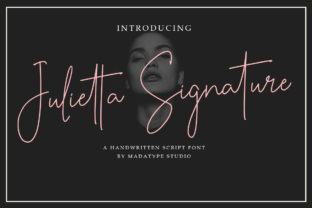
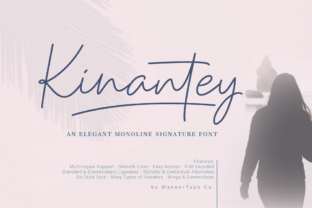
Kinantey stands out not because it shouts, but because it speaks with quiet confidence. It’s a monoline signature font—meaning its strokes maintain consistent weight throughout—designed to evoke handwriting that’s both intentional and effortless. Unlike script fonts that rely on dramatic contrast or exaggerated flourishes, Kinantey achieves elegance through restraint: smooth, flowing lines, subtle curvature, and carefully considered spacing. Its value lies in how naturally it integrates into professional design contexts where authenticity and polish matter—branding, editorial layouts, packaging, invitations, and digital assets where personality must coexist with clarity.
What Sets Kinantey Apart From Other Signature Fonts
Many signature fonts lean heavily on stylistic extremes—either overly ornate or artificially casual. Kinantey avoids both traps. Its construction prioritizes legibility without sacrificing character. Each glyph is drawn with continuity in mind; letters connect fluidly, yet remain distinct enough to support readability at moderate sizes (14–24 pt). The inclusion of extensive alternates—over 100 discretionary ligatures and contextual variants—isn’t decorative excess. These options let designers fine-tune rhythm and visual balance across words and phrases, avoiding repetition that can make automated script text feel robotic.
The font includes OpenType features like stylistic sets, initial and terminal forms, and swash alternatives—all accessible through standard design software (Adobe Illustrator, Photoshop, Affinity apps, and modern web platforms via variable font support). This isn’t just technical capability—it translates directly to control. For example, choosing a more upright ‘t’ for formal stationery versus a looping alternate for a boutique product label allows the same font to serve different brand tones without switching typefaces.
Real-World Performance and Practical Usability
In practice, Kinantey performs well across media. As a vector-based OTF/TTF, it scales cleanly for print applications—from business cards to large-format signage—without hinting issues or pixelation. On screen, it renders clearly in browsers supporting OpenType features, especially when paired with fallbacks or CSS @font-face declarations that load lightweight subsets for performance-critical sites.
Its monoline nature contributes to consistency in color reproduction. Unlike high-contrast scripts that risk thin strokes disappearing in low-resolution prints or dark mode interfaces, Kinantey’s uniform stroke weight maintains presence across backgrounds and output methods. That reliability matters most when typography supports trust—think law firm letterheads, academic certificates, or premium subscription onboarding flows.
One practical observation: Kinantey works best when used purposefully—not as body text, but as a focal point. It shines in headlines, logos, short quotes, signatures beneath testimonials, or as accent typography alongside neutral sans-serifs like Inter, Manrope, or Clash Grotesk. Overuse dilutes its impact. In a recent rebrand for a sustainable ceramics studio, Kinantey was applied only to the logotype and limited packaging accents—never in product descriptions or navigation. The result felt cohesive, elevated, and human-scaled.
Who Benefits Most—and When It Might Fall Short
Professionals who regularly craft visual identity systems will find Kinantey especially useful. Brand designers appreciate its adaptability across touchpoints: the same file can generate a clean logo lockup, elegant email headers, and tactile foil-stamped business cards. Freelancers building websites for small creative businesses often cite Kinantey’s ease of integration and licensing flexibility—especially the desktop + web bundle—as a time-saver compared to sourcing multiple fonts for different roles.
Entrepreneurs launching lifestyle brands—think artisanal skincare, independent publishing, or curated homeware—also respond well to Kinantey’s tone. Its warmth feels approachable without being informal; its precision signals care without stiffness. Educators creating course materials or workshop handouts report that students perceive content set in Kinantey as more thoughtfully produced—particularly when used for titles, section dividers, or instructor signatures on certificates.
That said, Kinantey isn’t universally suited. It lacks extended language support beyond Latin-based scripts (no Cyrillic, Greek, or Southeast Asian glyphs), limiting use in multilingual publishing or global campaigns. It also doesn’t include a bold or italic companion—so pairing requires thoughtful selection of secondary typefaces rather than built-in weight variation. And while its alternates are plentiful, they require manual activation in most tools; designers unfamiliar with OpenType panels may initially overlook them, defaulting to basic character sets and missing part of Kinantey’s expressive range.
Workflow Integration and Long-Term Value
Kinantey integrates smoothly into established workflows. It installs like any system font and appears in font menus across major design and publishing applications. For developers embedding it in web projects, the font files are well-structured and include WOFF2 variants for optimized loading. Licensing is straightforward: one-time purchase per user or site, with clear permissions for commercial use—including client work—provided the license covers intended usage scope.
Long-term, its value lies in longevity of style. Unlike trend-driven fonts that age quickly, Kinantey’s foundation in classic penmanship principles gives it staying power. It avoids gimmicks—no forced distress, artificial ink bleeds, or excessive bounce—that might date within months. Instead, it relies on proportion, spacing, and motion—elements that remain timeless in typographic design. One designer noted using Kinantey across three unrelated brand refreshes over four years; each time, it felt fresh because the context—not the font—defined the expression.
Practical Recommendations for Getting Started
Start by exploring the alternates deliberately—not all at once, but with intent. Try setting your brand name with three different combinations of initial/terminal forms and compare how each affects tone. Does a tighter connection between ‘K’ and ‘i’ feel more dynamic? Does a lifted ‘y’ tail add lightness? Use these choices to reinforce voice: confident, serene, playful, or grounded.
Pair Kinantey with a highly legible, low-contrast sans-serif for supporting text. Avoid fonts with competing calligraphic energy—like Playfair Display or Bodoni—which can create visual tension. Instead, opt for neutrality: Work Sans, IBM Plex Sans, or even Helvetica Now in its Text weights. Let Kinantey lead; let the secondary face recede.
Test at real-world sizes and environments. Print a sample on your target paper stock. View it on mobile in both light and dark modes. Check contrast ratios if used over images or gradients—its monoline nature means it needs sufficient background separation to remain legible.
Kinantey won’t solve every typographic challenge. But for those seeking a signature element that conveys sincerity, craftsmanship, and quiet sophistication—without demanding constant attention—it offers reliable, adaptable, and quietly distinguished utility. It’s less about what Kinantey *is*, and more about how thoughtfully it lets you say what matters.