Month Glade: A Curvy Calligraphy Font for Thoughtful Design Choices
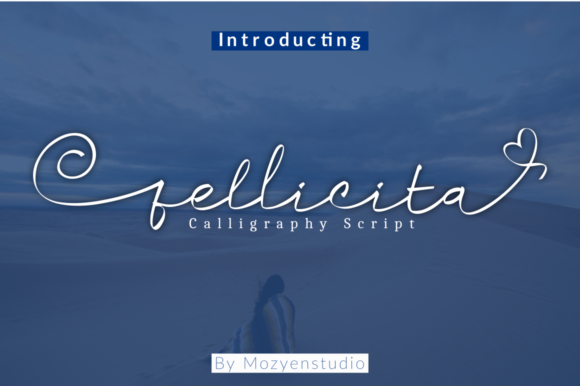
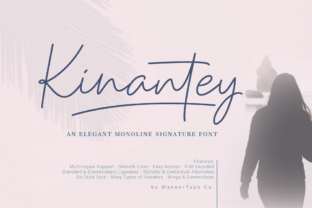
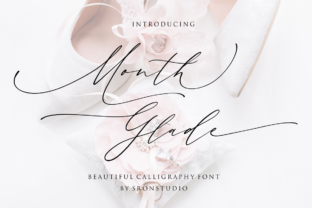
Month Glade is a hand-crafted calligraphy typeface characterized by flowing strokes, subtle contrast, and gentle curves. It belongs to the script font category—specifically, a formal script with romantic, organic qualities. Unlike monoline or brush-style scripts, Month Glade features varying stroke widths that mimic traditional penmanship, lending it warmth and personality without sacrificing legibility at larger sizes.
Designers and creators often seek fonts like Month Glade when aiming to evoke elegance, intimacy, or timelessness. Its structure supports both expressive headings and carefully composed short text—such as wedding invitations, boutique branding, artisan product labels, or editorial feature titles. However, its suitability depends less on aesthetic appeal alone and more on alignment with functional requirements and project constraints.
When Month Glade Fits Naturally Into a Project
Month Glade performs best in contexts where visual tone matters as much as readability—and where text volume remains limited. For example:
- Printed stationery: Wedding suites, anniversary cards, or custom certificates benefit from its graceful rhythm and humanist texture.
- Branding for lifestyle or luxury niches: Small-batch skincare lines, independent bookshops, or handmade ceramics brands may use Month Glade in logos or wordmarks to signal craftsmanship and care.
- Digital accents: As a display font in hero sections, social media graphics, or email headers—provided it’s paired with a highly legible sans serif or serif for body copy.
In these cases, Month Glade contributes emotional resonance without demanding technical compromises. Its OpenType features—such as ligatures, stylistic alternates, and swash characters—allow for nuanced typographic expression, especially when used with design software that supports advanced font features (e.g., Adobe Creative Cloud or modern web platforms using @font-face with proper feature syntax).
Key Considerations Before Choosing Month Glade
While Month Glade offers distinct visual character, practical evaluation reveals several important factors:
Legibility at Smaller Sizes
Like most formal scripts, Month Glade is not designed for extended reading. Its connecting strokes and delicate terminals reduce clarity below ~24–30px in digital use and ~12pt in print. Using it for body text, captions, or interface labels risks misreading—particularly for readers with visual impairments or those viewing on low-resolution screens.
Language and Character Support
Month Glade typically includes Latin-based glyphs covering Western European languages (including accented characters for French, Spanish, German, etc.). It does not generally support Cyrillic, Greek, Arabic, or East Asian scripts. Projects requiring multilingual content—or even extended Latin characters like IPA symbols or mathematical notation—will need supplemental typefaces or fallback solutions.
Licensing and Technical Integration
Month Glade is distributed under commercial licenses that vary by vendor. Some versions permit web embedding; others restrict usage to desktop applications only. Always verify license terms before deploying it in client work, SaaS products, or open-source projects. Web use also requires attention to file size and loading performance—especially if multiple weights or styles are needed (note: Month Glade is commonly offered in a single weight, limiting typographic hierarchy options).
Situations Where Alternatives May Be More Appropriate
Not every project calling for “a beautiful script” needs Month Glade specifically. Consider alternatives when:
- You need scalability across weights: Month Glade lacks bold, light, or italic variants. If your design system relies on typographic contrast for emphasis or information architecture, a multi-weight script (e.g., Brittany Script or Parisienne) or a pairing strategy with a robust companion font may serve better.
- Accessibility is a primary requirement: WCAG guidelines emphasize clear letterform distinction and sufficient color contrast. Formal scripts—including Month Glade—often fall short here. In such cases, prioritize fonts with higher x-heights, open counters, and tested accessibility profiles, even if they feel less decorative.
- You’re designing for dynamic or user-generated content: Applications involving variable-length headlines, CMS-driven layouts, or real-time text rendering may struggle with Month Glade’s fixed spacing and connection logic. A more flexible script—or a hybrid approach using Month Glade only for static, curated elements—reduces layout instability.
Making a Practical Decision
Evaluating Month Glade isn’t about whether it’s “good” or “bad”—it’s about fit. Start by clarifying three questions:
- What role does typography play in this project? If it’s primarily atmospheric (e.g., reinforcing brand mood), Month Glade can be effective. If it must communicate complex information quickly, it likely shouldn’t lead.
- What environments will the text appear in? Test Month Glade across intended devices and output methods—not just on your high-end monitor, but on mobile screens, printed proofs, and accessible browsers. Adjust tracking, size, and color accordingly.
- What resources are available for implementation? Do you have access to OpenType-aware tools? Is licensing budgeted? Can developers support web font loading strategies (e.g.,
font-display: swap) to avoid invisible text during load?
If Month Glade aligns across these points, it can add meaningful value. If gaps appear—especially around flexibility, language coverage, or technical constraints—exploring complementary options becomes a responsible next step. Other formal scripts (e.g., Great Vibes, Homemade Apple) or semi-script hybrids (e.g., Playfair Display with script-inspired italics) may meet similar goals while offering broader utility.
Final Thoughts
Month Glade is a considered choice—not a default. Its charm lies in restraint: it works because it’s used selectively, intentionally, and with awareness of its boundaries. For designers balancing aesthetics with function, it serves as both a tool and a reminder—that typography is never neutral. Every font carries assumptions about audience, medium, and message. Choosing Month Glade signals a decision to prioritize expressiveness in specific, well-defined moments. When matched to those moments, it earns its place. When stretched beyond them, its strengths become limitations.
Before committing, download a trial version and test it against your actual content—not placeholder text. Observe how it behaves with your brand’s voice, your users’ needs, and your technical stack. That real-world evaluation remains the most reliable guide.