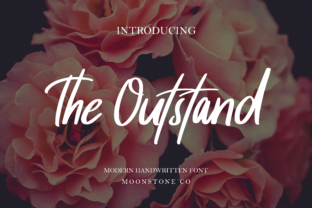
Riogrande: Where Handwritten Charm Meets Modern Design Confidence
There’s something quietly magnetic about a font that feels like it was written just for you—ink still fresh, curves intentional, rhythm unhurried. Riogrande does exactly that. It’s not merely a handwritten typeface; it’s a confident, romantic gesture in letterform. With its generous spacing, expressive swashes, and gentle contrast between thick and thin strokes, Riogrande balances warmth with strength—a rare duality that makes it equally at home on a wedding invitation and a boutique brand’s hero banner.
More Than Just “Pretty”: The Quiet Power of Riogrande’s Design
At first glance, Riogrande invites affection. Its lowercase a, g, and y carry subtle flourishes—never overwhelming, always graceful. But look closer: the uppercase R has a decisive, anchored stance; the T stands tall and centered; even the dot over the i is slightly elongated, lending intentionality to every detail. This isn’t accidental charm—it’s deliberate craftsmanship.
Riogrande avoids the fragility sometimes associated with script fonts. Its x-height is generous, its baseline steady, and its letterforms maintain clarity even at smaller sizes—say, 14–16px in body text overlays or captioned social posts. That practical legibility means designers don’t have to sacrifice personality for function. Whether you’re setting a tagline on a Shopify product page or hand-lettering a limited-edition book cover, Riogrande delivers presence without pretense.
How Riogrande Fits Into Real Creative Workflows
Modern design isn’t about picking fonts in isolation—it’s about how they behave across touchpoints. Riogrande shines where authenticity matters most:
- Branding for lifestyle and wellness businesses: A yoga studio launching a new retreat series used Riogrande for its email headers and Instagram story templates. The font’s organic flow mirrored their messaging—grounded, nurturing, intentional—without veering into cliché “zen” tropes.
- Editorial design with emotional resonance: A literary magazine chose Riogrande for pull quotes in long-form essays. Readers reported feeling “drawn in,” not distracted—an effect attributed to the font’s natural pacing and breath-like spacing.
- Packaging that tells a story: A small-batch honey brand applied Riogrande to jar labels alongside minimalist line art. The contrast between delicate illustration and confident lettering reinforced their values: tradition, care, and quiet luxury.
Importantly, Riogrande works seamlessly in digital environments. It’s optimized for web use (available in WOFF2 format), renders crisply on both iOS and Android, and pairs beautifully with clean, neutral sans-serifs like Inter or Lato for body copy. No awkward kerning fixes. No fallback anxiety. Just reliable, romantic energy—on screen and in print.
Why Designers Choose Riogrande Over Other Handwritten Fonts
Let’s be honest: the market is full of script fonts. Some feel rushed. Others lean too heavily into calligraphic formality—or worse, artificial “quirk.” Riogrande stands apart because it feels lived-in. Its slight irregularities aren’t flaws—they’re evidence of human rhythm. That authenticity resonates deeply with audiences increasingly skeptical of overly polished, algorithm-driven aesthetics.
Consider these practical differentiators:
- Weight consistency: Unlike many handwritten fonts that vary wildly in stroke density—even within a single word—Riogrande maintains balanced visual weight. This ensures harmony in headlines and prevents “bouncing” eye movement.
- Open counters and generous apertures: Letters like e, c, and s breathe easily. That improves readability in longer passages and helps avoid visual crowding, especially on lower-resolution screens.
- Thoughtful language support: Riogrande includes extended Latin characters—covering accents used across French, Spanish, Portuguese, German, and Scandinavian languages. If your audience spans borders (or your brand voice leans bilingual), this isn’t a nice-to-have—it’s essential.
And yes—it includes ligatures and alternate glyphs. Not as gimmicks, but as meaningful options. The “&” character, for instance, is elegantly integrated—not tacked on. Swash capitals appear only where they enhance, not interrupt. You control the tone, not the font.
Pairing Riogrande With Intention (Not Just Contrast)
Good pairing isn’t about opposites attracting—it’s about shared values. Riogrande thrives alongside typefaces that respect space, rhythm, and subtlety.
Try it with:
- Clarity-focused sans-serifs like Inter or Manrope for websites and apps—clean enough to recede, warm enough to complement.
- Low-contrast serifs like Charter or PT Serif for editorial layouts where Riogrande introduces moments of emphasis without hierarchy whiplash.
- Even other scripts—but sparingly: One designer layered Riogrande over a soft, monoline Arabic script for a cultural festival identity. The result felt conversational, not competitive—two voices sharing the same space with mutual respect.
Avoid overloading it. Riogrande doesn’t need embellishment. Drop shadows, heavy outlines, or excessive tracking dilute its sincerity. Let it speak plainly—and it will hold attention longer than any flashy treatment.
When Riogrande Is the Right Choice (And When It’s Not)
Riogrande excels when your goal is connection—not correction. It’s ideal for projects rooted in emotion: love stories, personal milestones, artisanal craft, mindful living, poetic expression. It also performs well in contexts where users seek reassurance: healthcare newsletters, therapy practice websites, educational platforms focused on empathy and growth.
That said, context matters. Riogrande may not be the best fit for:
- High-density data dashboards requiring rapid scanning.
- Legal disclaimers or regulatory text where neutrality and uniformity are non-negotiable.
- Brands built on stark minimalism or aggressive futurism—its warmth can unintentionally soften intended impact.
The key isn’t whether Riogrande is “versatile”—it’s whether it aligns with your message’s heartbeat. Ask yourself: Does this project benefit from intimacy? Does it ask the viewer to pause, reflect, feel? If yes, Riogrande isn’t just appropriate—it’s resonant.
Getting Started With Riogrande: Practical First Steps
You don’t need a design degree to use Riogrande well. Start simple:
- Begin with one use case: Try it in your next email subject line or social media bio. Notice how it changes perception—not just appearance.
- Test readability early: Paste a paragraph into your CMS or mockup tool at 18px and 24px. Scroll past it twice. Does it feel inviting—or demanding?
- Respect its rhythm: Riogrande benefits from generous line height (1.5–1.7) and thoughtful letter spacing (+10–20 units in design tools). Tighten it, and you mute its grace.
Most importantly—trust your instinct. If Riogrande makes you smile before you’ve even typed a word, that’s your signal. Because great typography doesn’t shout. It leans in, softly, and says: This matters. So do you.