Sunday: Elegant Handwritten Font for Sophisticated Design
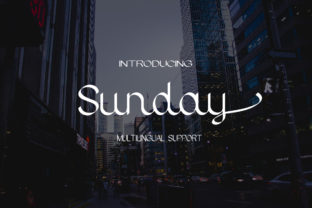
Sunday isn’t just another script font—it’s a carefully crafted handwritten typeface that feels personal, refined, and quietly confident. Designed with natural stroke variation, subtle flourishes, and balanced spacing, Sunday brings warmth and intention to every letter. It doesn’t shout; it invites. Whether you're sketching a logo on paper or building a brand identity in Figma, Sunday adds a layer of sophistication without sacrificing approachability.
What Makes Sunday Stand Out
At its core, Sunday is a display script—meant for headlines, quotes, invitations, and short impactful text—not long paragraphs. Its elegance comes from organic imperfections: slight inconsistencies in line weight, gentle tapering at terminals, and graceful connections between letters that mimic real pen-on-paper motion. Unlike overly ornate scripts, Sunday avoids visual clutter. It’s legible at medium sizes, holds up well in both digital and print formats, and pairs beautifully with clean sans-serifs like Inter or Lato for contrast and balance.
It’s also versatile in tone. Used lightly—say, as a tagline over a minimalist product photo—Sunday feels modern and thoughtful. Applied more boldly, like on a wedding suite or artisanal coffee bag, it evokes craftsmanship and care. That adaptability makes it valuable across contexts, not just one niche.
Where Sunday Fits Into Real Creative Work
Think about the last time you saw a design that made you pause—not because it was flashy, but because it felt *intentionally human*. That’s Sunday’s sweet spot. Here are everyday places where it shines:
- Small business branding: A local bakery might use Sunday for its shop sign and packaging, reinforcing authenticity and handmade quality.
- Digital content: Bloggers and educators add Sunday to course title graphics or social media quote cards—making ideas feel more personal and memorable.
- Printed materials: Wedding stationery, boutique retail tags, or handmade soap labels gain quiet luxury when set in Sunday.
- Presentations and teaching tools: Educators use it sparingly in slide headers or handouts to emphasize key concepts while keeping visuals warm and engaging.
- Personal projects: From journal covers to custom greeting cards, Sunday helps hobbyists express individuality without needing advanced design skills.
You don’t need to be a designer to benefit from Sunday. Even beginners using Canva or Google Slides can drop it into a template and instantly elevate the mood—no color theory or layout expertise required.
Why People Choose Sunday (and When They Might Not)
Most users turn to Sunday when they want to communicate sincerity, creativity, or refinement—especially if their audience values authenticity over polish. It works especially well for brands or individuals who want to stand out from generic corporate fonts, yet avoid looking overly playful or childish.
That said, Sunday isn’t ideal for every situation. Because it’s a script, readability drops quickly at small sizes or in dense blocks of text. Avoid using it for body copy, legal disclaimers, or mobile navigation menus. Also, keep in mind that script fonts rely heavily on context—Sunday thrives alongside generous whitespace, muted palettes, and thoughtful imagery. Throwing it onto a busy background or pairing it with another decorative font often dilutes its impact.
A Few Practical Tips Before You Begin
If you’re new to working with script fonts like Sunday, start simple:
- Limit usage: One headline, one accent phrase per layout is usually enough. Let it breathe.
- Check spacing: Some applications auto-kern poorly with scripts. Manually adjust letter spacing (tracking) if letters appear too tight or disconnected.
- Test legibility early: View your design on a phone screen before finalizing. If the “S” and “u” in “Sunday” blur together, scale up or simplify.
- Consider licensing: Sunday is available through reputable foundries and font marketplaces. Make sure your license covers intended use—e.g., web embedding for a portfolio site versus commercial use in client work.
- Pair thoughtfully: Try Sunday with neutral, highly readable fonts for supporting text. A strong contrast in style (not weight) creates harmony—not competition.
Real-Life Inspiration You Can Try Today
You don’t need a big project to explore Sunday’s potential. Try these low-effort, high-impact experiments:
- Create a printable weekly planner header using Sunday for the day name (“Sunday”) and a clean sans-serif for the date—suddenly, your routine feels more intentional.
- Design a simple Instagram Story banner for your side hustle: Sunday for the offer (“Hand-Lettered Quotes • Custom Orders”), paired with soft pastel tones.
- Redesign your email newsletter subject line preview using Sunday in a mockup image—see how it changes the emotional pull before sending.
- Use Sunday in a Canva presentation slide to highlight a core value (“Clarity. Care. Craft.”) during a team workshop or class lecture.
These aren’t just design tricks—they’re ways to reinforce voice and values without saying a word. Sunday becomes part of your communication toolkit, not just decoration.
A Final Thought on Choosing With Intention
Fonts are more than visual choices—they’re subtle messengers. Sunday signals attention to detail, respect for craft, and a desire to connect on a human level. That’s why it resonates with entrepreneurs launching their first Etsy shop, educators building inclusive classroom materials, or freelancers refining their portfolio to reflect their best self.
It won’t fix weak messaging or poor layout—but in the right hands, Sunday enhances clarity, deepens resonance, and quietly raises the bar. And sometimes, that quiet lift is exactly what your next project needs.