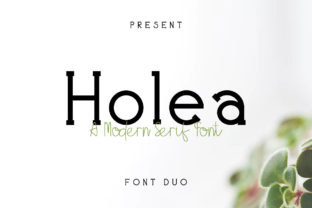
Holea: A Light, Elegant Serif for Creative Projects
Holea is a serif font that feels both effortlessly refined and quietly confident. It’s not loud or ornate—instead, it carries a gentle rhythm, clean proportions, and subtle contrast that lend warmth without sacrificing clarity. Designed with readability and personality in mind, Holea bridges tradition and modernity: its serifs are crisp but soft-edged, its x-height generous, and its letterforms balanced for both screen and print. Whether you’re crafting a boutique brand identity or designing a thoughtful newsletter, Holea adds a layer of quiet luxury—not through excess, but through intention.
Why Designers Reach for Holea
Designers choose Holea when they want elegance that doesn’t demand attention—but earns it. Unlike high-contrast serifs that can feel formal or dated, Holea maintains approachability. Its light weight gives it airiness; its consistent stroke modulation ensures legibility at small sizes; and its open counters improve scanning in body text. That makes it unusually versatile: equally at home in a minimalist wedding invitation, a sustainable skincare label, or the editorial layout of an independent magazine.
What sets Holea apart isn’t just aesthetics—it’s behavior. It pairs well with both neutral sans-serifs (like Inter or Poppins) and expressive display fonts, acting as a grounding element in layered typographic systems. And because it includes true italics—not slanted romans—emphasis feels considered, not tacked on.
Creative Applications Across Real Projects
Here’s where Holea shines—not as a decorative flourish, but as a functional choice aligned with purpose and audience:
- Brand identities for lifestyle and wellness businesses: A yoga studio, ceramicist, or slow-fashion label might use Holea for logotypes, packaging copy, or website headlines. Its lightness reflects calm; its serif structure conveys care and craft.
- Digital newsletters and blogs: Holea’s generous spacing and open forms reduce eye strain in long-form reading. Try it at 18–20px for body text on light backgrounds—especially effective when paired with a restrained sans-serif for UI elements or captions.
- Editorial design: Magazines, zines, or annual reports benefit from Holea’s quiet authority. Use it for pull quotes, subheads, or caption typography to add hierarchy without visual noise.
- Social media graphics: On Instagram or Pinterest, Holea stands out in quote cards or product teasers—not because it’s flashy, but because its rhythm guides the eye naturally. Avoid overloading it with effects; let its inherent balance do the work.
- Printed materials with tactile appeal: Letterpress business cards, foil-stamped book covers, or linen-bound journals gain depth when set in Holea. Its fine strokes translate beautifully to physical texture.
Adapting Holea for Different Audiences and Platforms
One size doesn’t fit all—and Holea doesn’t need to. Its strength lies in how easily it adapts to context without losing character.
For educators and course creators, Holea works well in slide decks and handouts where clarity and warmth matter. Use it for titles and key takeaways—then switch to a highly legible sans-serif (like Open Sans or Roboto) for bullet points or data labels. This keeps information scannable while preserving a cohesive, human tone.
Freelancers and small business owners often juggle multiple formats—website, email, social posts, printed invoices. Establish one primary weight (e.g., Holea Regular) for headlines and body copy across platforms, then adjust sizing and line height per medium. On mobile, increase line height to 1.6 and limit line width to ~65 characters for optimal readability.
Bloggers and content creators can use Holea to signal voice and values. If your writing leans reflective, literary, or values-driven, Holea reinforces that sensibility—without requiring readers to “decode” your intent. Just avoid pairing it with overly playful or aggressive fonts; consistency builds trust.
Practical Tips for Strong Results
Getting the most from Holea isn’t about complexity—it’s about thoughtful execution:
- Start with hierarchy: Use Holea Light for delicate accents (like taglines), Regular for body and subheads, and Bold only for impactful section titles—not every headline. Overusing bold undermines its elegance.
- Respect whitespace: Holea breathes best with generous margins and line spacing. In digital layouts, aim for 1.4–1.6 line height in body text and at least 1.8x font size for paragraph spacing.
- Test contrast early: On screens, ensure text meets WCAG AA contrast standards (4.5:1 minimum for body). Holea Light on white may fall short—opt for Regular or pair with off-white or warm-gray backgrounds instead.
- Limit font weights: Stick to two or three weights max in any single project. Too many variations dilute cohesion and increase load time on websites.
- Consider licensing: Holea is available through reputable foundries with clear web and desktop licenses. Always verify usage rights—especially for client work or commercial products.
When to Pair Holea—and When to Let It Stand Alone
Holea excels in duos. Its light, structured presence pairs naturally with geometric sans-serifs (think Montserrat or Work Sans) for contrast that feels intentional, not arbitrary. For more organic projects—say, a botanical illustration series or artisanal food packaging—try it alongside a subtle handwritten font for ingredient lists or notes. But remember: Holea doesn’t need competition. In minimalist contexts—a single-page portfolio, a monochrome poster, or a luxury product label—it holds attention powerfully on its own.
The key is alignment: does the supporting typeface share Holea’s values—clarity, restraint, craftsmanship? If yes, the pairing will feel grounded. If not, simplify. Sometimes the most confident choice is letting Holea speak clearly, without accompaniment.
A Font That Supports Your Intent—Not Just Your Aesthetic
Holea isn’t about chasing trends. It’s about choosing a tool that supports what you’re trying to say—and who you’re saying it to. Its lightness invites pause. Its serif roots suggest continuity and care. And its quiet confidence means it works whether you’re launching a side hustle, redesigning a classroom handout, or typesetting a poetry chapbook.
That’s the real utility of a font like Holea: it doesn’t shout “look at me.” Instead, it says, “this matters,” and lets your content—and your audience—take center stage.